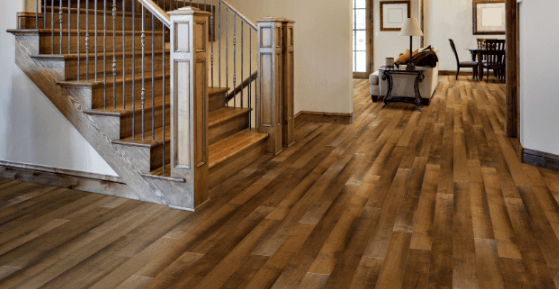

Hardwood and laminate flooring each offer distinct performance profiles and value propositions. Hardwood provides natural warmth, potential refinishing longevity, and a premium resale appeal, but is susceptible to moisture and denting depending on species and finish. Laminate delivers uniform wear resistance, easier maintenance, and typically lower installed cost with simpler subfloor prep. The choice hinges on room conditions, traffic, and budget, leaving a practical cross-check that guides the next step in material selection.
How to Decide Between Hardwood and Laminate
When deciding between hardwood and laminate, the key considerations are durability, cost, and installation implications. The analysis employs practical evidence and industry terminology to guide decision makers through material profiles, installation methods, and lifecycle expectations. hardwood vs laminate comparison informs selection by relating finish layers, substrate compatibility, and engineered alternatives, ensuring a freedom-oriented evaluation without unnecessary embellishment.
Real-World Performance: Durability, Moisture, and Foot Traffic
Real-world performance contrasts emerge when evaluating hardwood and laminate under common use conditions, focusing on durability, moisture resistance, and tolerance to foot traffic.
Comparative testing reveals durability benchmarks across wear layers, edges, and finishes, with laminate often displaying consistent abrasion resistance and moisture resilience in subfloor environments.
Hardwood endpoints vary by species; durability benchmarks inform selection for high-traffic areas and moisture-prone zones.
Cost, Maintenance, and Longevity: What This Means for Your Budget
The cost, maintenance, and longevity of hardwood versus laminate flooring hinge on total ownership expenses, ongoing care requirements, and expected service life under typical residential and commercial use.
Cost comparisons reveal capital outlay variances, lifecycle costs, and resale value, while installation impact influences disruption, subfloor prep, and warranty validity.
Maintenance schedules and refinishing needs drive long-term budgeting considerations.
Choosing by Room and Look: Style, Installation, and Practical Fit
Selecting hardwood or laminate flooring hinges on room function, traffic patterns, and aesthetic objectives, with emphasis on installation practicality and long-term performance.
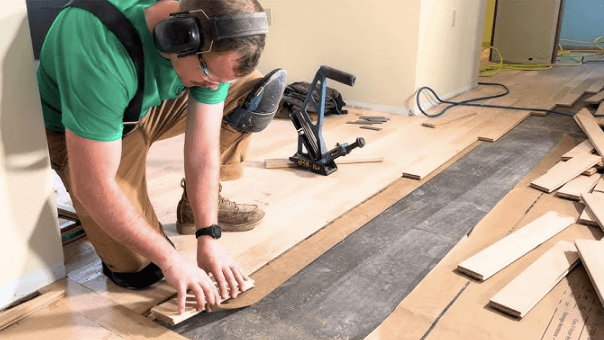
In practice, room-specific style contrast guides material choice, while installation nuances determine underlayment, moisture management, and fastening systems.
The discussion emphasizes practical fit, predictable results, and measurable performance across residential environments, balancing versatility with durability and ease of maintenance.
Frequently Asked Questions
Can Laminate Mimic the Feel of Real Hardwood?
Laminate can mimic the feel of real hardwood. Modern constructions use laminate texture and hardwood embossing to simulate grain depth, wear patterns, and tactile variation, delivering convincing authenticity while maintaining dimensional stability and cost efficiency for freedom-seeking installations.
How Long Does Laminate Typically Last Under Heavy Use?
Laminate typically lasts 15–25 years under heavy use, depending on traffic, install quality, and underlayment impact. Laminate durability hinges on proper underlayment choice, with noise reduction benefits and reduced floor movement during heavy traffic wear.
Is Engineered Hardwood More Stable Than Solid Wood?
Engineered hardwood offers greater stability than solid wood in fluctuating climates due to layered construction, reducing expansion and contraction. It demonstrates engineered stability, while solid wood exhibits more sensitive solid wood behavior under humidity and temperature shifts.
Which Option Adds More Resale Value to a Home?
The answer: Hardwood typically adds more resale value than laminate, though durability and cost influence outcomes; in practice, solid hardwood aligns with enduring resale value, while laminate modernizes appeal within evolving flooring trends, balancing value and freedom.
See also: AI in Threat Detection
How Do Pet Claws Affect Surface Finish Over Time?
Pet claws accelerate surface wear, causing micro-scratches and gloss loss; over time, wear patterns reveal softer zones. Proper installation methods and moisture resistance high, yet maintenance mitigates damage from pet claws and accelerates surface wear.
Conclusion
Hardwood and laminate each serve distinct performance niches. Real-world data show hardwood’s refinishability extends life but exposure to moisture remains a vulnerability, while laminate’s layered construction yields superior scratch resistance and stable underfoot performance in variable subfloor conditions. A representative statistic: average lifetime value trends place durable laminate at 15–20% lower initial cost with comparable maintenance, yet high-end hardwood can surpass laminate in resale value by up to 25–30% when paired with reputable finish systems. Practical selection hinges on room function, budget, and moisture exposure.

 By
By

 By
By